Showing posts with label Learning. Show all posts

Sunday, December 2, 2018

Hour of Code ar RES, December 2018

This week RES students will be participating in Hour of Code during enrichment classes. The week of December 3rd - 7th, 2018 all RES students in grades kindergarten through four will have a hands on introduction to computer programming with Hour of Code activities during their enrichment classes! 

Computer programming helps nurture problem-solving skills, logic and creativity in people of all ages. Kindergarten, first and second graders will use  Scratch Jr. app for iPads, while third and fourth graders will choose from a variety of tutorials on Code.org.


Introducing Hour of Code! Here is a great video explaining some of the benefits of coding:


STUDENTS:  Here are the links for Hour of Code at school this week....some great choices:
Dance Party
https://hourofcode.com/danceparty
Minecraft
https://hourofcode.com/mchoc
Star Wars
https://hourofcode.com/star-wars
Animate your Name
https://hourofcode.com/scratchanim

or choose your own challenge (make sure to note the grade level):
https://hourofcode.com/us/learn

FAMILIES and TEACHERS: Here are links to continue the learning beyond this week at school!  ALL of the included links and recommendations are FREE!
Scratch Jr. iPad app
Scratch Jr. Android app 
More ways to learn from Code.org
Scratch  


Do you have questions about coding?  Do you want to figure out ways to help your kids use computers and tablets to create things versus consume content?  I would be happy to chat with you about this...just reach out to Darcie Rankin at darcie.rankin@cesuvt.org.

“The 'Hour of Code™' is a nationwide initiative by Computer Science Education Week [csedweek.org] and Code.org [code.org] to introduce millions of students to one hour of computer science and computer programming.”


Monday, June 5, 2017

Fourth Grade Capstone Project Celebration! Save the Date!

RES logo.PNG


Fourth Grade Capstone Project Celebration!

All RES fourth graders will be sharing their
Capstone individual research projects
From Enrichment Library class on

June 14, 2017
8:50-9:30 am
RES Library

Families are welcome to join us!
(this is right before the start of Field Day)
We will also be posting all these awesome projects
on our Enrichment Library class blog,

Sincerely,
Darcie Rankin, RES enrichment teacher
Beth Redford, RES library media specialist

Sunday, January 29, 2017

Building Coding Connections

In December all students at Richmond Elementary School participated in an Hour Of Code during their enrichment classes.  This was an excellent chance for students to be exposed to the concepts of coding. After several years of Hour of Code at our school, as well as many teachers embracing coding for special projects in their classrooms over the last three years...students have developed great early coding skills.
This year I signed up to participate in the Vermont Robot Rodeo. My teaching goal was for students to have an opportunity to advance their coding skills as they made connections between hardware and software.  I feel that in elementary school the ability to connect coding to the physical manipulation of materials is an awesome way to build true and lasting understanding. I have also seen it increase student engagement as the sharing of results is so transparent (i.e. Robots roll across the floor or say something or react to something!). 

This year I chose to focus the use of robots to build coding connections in our third grade classes(younger classes got exposure to the robots less formally).  We began our investigation by giving every student a chance to explore what robots could do. During this period, we might use apps that were more like a remote control versus coding and kids were encouraged to play.  After this exposure I challenged students to use coding applications to control the robots and to make them 'do something' deliberate and expected.  Students jumped right in to meet this challenge.  They used Blockly and Tickle applications and developed cool project ideas: making a robot draw something, dance to music, greet others, create a light show, interact with another robot, pull a toy on a path, make it through an obstacle course...to name a few!  They wrote many lines of code, tested and iterated to achieve their goal, worked together and had a lot of fun.  Several students pointed out that this work was hard....but not because they wanted  to stop.....but I think they were just proud of themselves! And I was proud of their persistence and drive to learn. 

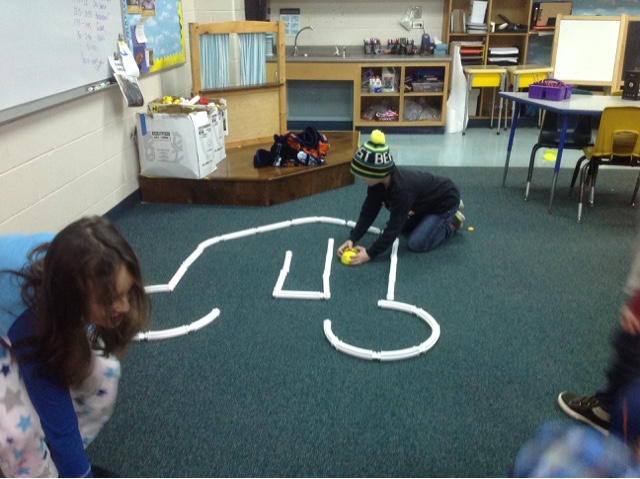
Kindergarten getting early exposure to coding skill through maze building and BeeBot
Third Graders putting their coding skills to the test!

The Vermont Robot Rodeo is an amazing opportunity to expose students to these coding connections and we are grateful to all of the sponsors who provided funds to give our kids the chance to advance their coding skills. We will be sad to send Dash and Dot to the next school--but we are sure that they will learn as much as we did--and we will be watching and checking out their work too.

I look forward to watching as our RES students use all of the skills they developed and applying this same persistence, thinking and collaboration to other learning.
Below is a video that hilights student work with robots, coding examples and student reflections.

Tuesday, January 3, 2017

Media Literacy in Elementary School-- An Educator's Reflection

Often my enrichment blog posts are letting people know about upcoming awesome events, or to highlight amazing student work that is going on in our classroom at all the different grade levels.  Occasionally though I use this blog to share some of my reflections on education as a professional that is striving to support students each day.

For the last several months the news, especially the educational news, has had many articles about the realization that in the constant deluge of media that surrounds all of us...some information, and sometimes quite a bit of information is 'FAKE'. Educators around the country are asking how they can help students to be prepared for this world of media where sources are not verified, random tweets can go viral with no basis of truth , where fact checking is not a mandatory part of published work (after all anyone --even I-- can publish a blog!!).  They are worried that if adults are falling victim to false media...what does this mean for our children and students?

These are important questions, and for several weeks I have been reflecting on how this impacts my students and myself as an elementary educator. It is important to me that my educational practice is not only meeting the prescribed 'have tos' of our district, or state, but that we are supporting students in being world and digital citizens and that we are thinking about these big questions. Some people may think that perhaps this topic is not really one for elementary education----after all students can learn about media bias in middle or high school when they are actually using those tools--right?  In a recent discussion with a fellow educator she posed a great question to me: Are these questions really the questions about FAKE news developmentally appropriate for elementary students?  Is this something that our students are going to come across in their learning and be able to make concrete connections to?

I believe that they are important, AND that we need to look at them through a developmentally appropriate lens.  We need to think carefully about what foundational skills students need to be media literate in this fast paced 'information overload' society. We need to accept that our students even at ages 6 and up are exposed to social media (some through looking at older family member accounts, some through their own accounts despite best effort age restrictions, and MANY through word of mouth).  We need to accept that students are participating in their own forms of social media through texting.  I have been having discussions for four years with nine and ten year olds about internet safety.  In that short time the number of students exposed to or connected to someone exposed to online forums (games, chat rooms, social media) has gone from a handful to about %85.  Children are digital natives--technology is prolific and our acceptance of this needs to come with thoughtful educational practices that support their navigation of this awesome, amazing and sometimes FAKE new source of information.

I want my students to embrace all of these great new avenues for learning..BUT...I want my students to be able to critically evaluate media and consume media thoughtfully.  In a recent School Library Journal on this topic (See Full article here:  http://www.slj.com/2017/01/industry-news/the-smell-test-educators-can-counter-fake-news-with-information-literacy-heres-how/#_   Author: Linda Jacobson, Downloaded on 1/3/2017) they share that 
"Media literacy experts stress that children should begin acquiring these questioning skills long before they are old enough to use social media. Even in the early years, they can begin to question the messages in signs and TV commercials."
  In an article on Common Sense Media (an amazing website I utilize as an educator and a parent frequently) they warn: 

"If you get your news online or from social media, this type of headline sounds very familiar. What's real? What's fake? What's satire? Now that anyone with access to a phone or computer can publish information online, it's getting harder to tell. But as more people go to Facebook, Snapchat, Twitter and other online sources for their news and information, it's even more crucial that all of us -- especially kids -- learn to decode what we read online"
 ( See full article here:  https://www.commonsensemedia.org/blog/how-to-spot-fake-news-and-teach-kids-to-be-media-savvy  Author: Sarah Filucci, Downloaded on 1/3/2017).

So...what can we do to build critical thinking skills, to help our kids decode media? Here are some of my ideas:

--Use developmentally appropriate context to show students that not all media is true
----In younger grades this, as Jacobson suggests in her article, is as simple as pointing out that some stories are true and some are not (fiction versus nonfiction)
----In second grade enrichment we learn to blog and blog comment.  As we explore this medium we learn that anyone can write anything online and that we have a responsibility to ourselves and others for our content as we share with our school and family community.
----In our fourth grade library enrichment class we expose students to brand association (they are amazed how many candies they can identify just with a single letter!), share commercials and the preparation of commercials (did you know that there are 'food artists'?), think about how toys are advertised and then how they actually are in real life applications, teach students advertising strategies and watch them search these out in magazines, posters, books, and videos.  We also share some fake internet websites and provide tools for students to question the validity of their resources.  (Check out: http://zapatopi.net/treeoctopus/).
----Persuasive essays are part of all grades K-4 writing requirements---but how far can we go to persuade someone? Can we modify the truth?  Perhaps students should have time to play with this idea!

--Give students opportunities to CREATE media as well as to consume it
----Through creation of media I believe that students gain a direct understanding of what they are consuming.  It allows them to more quickly understand the connection between author, media message and purpose.  As students in fourth grade create book trailers to advertise a favorite book they are challenged to use at least two advertising strategies....and suddenly they are analyzing their own work and have more agency to analyze the work of others! When a second grader shares something through blogging and receives comments from someone in Florida, they witness how a message travels online.

--Provide students with strong role models
----I believe that we have to be critical thinkers and creators of media in order to  model digital citizenship. If students see us as a person they can rely on to help them digest and evaluate media then as educators we can support their learning journey more successfully.

--Develop stronger community conversations around media literacy
----This is one I have not quite figured out how to do yet in my role.  I think it would be great to build a community conversation about how we can help students to be critical consumers of media not just for school projects but ALL of the time.

Here are a few resources that I really appreciate about media literacy (this is not exhaustive and not intended to be exclusionary):

https://www.commonsensemedia.org/

http://mediasmarts.ca/media-literacy-101
http://www.medialit.org/

Do you feel media literacy is an important part of elementary education?  What can I do as the enrichment teacher to further support this  work?  What changes are you seeing around media creation and consumption--do you have questions, concerns, excitement?  I would love to hear from you!


Happy 2017

It is GREAT to be back at RES for another year of learning with students, staff and families.

http://f.tqn.com/y/webclipart/1/S/G/Q/6/Happy-New-Year-Snowman.png
Image from : http://f.tqn.com/y/webclipart/1/S/G/Q/6/Happy-New-Year-Snowman.png
I always welcome feedback and ideas that will support my enrichment work with students. I also welcome families and community members to join our class to teach and learn with us.  Do you have ideas? I can be contacted by email at darcie.rankin@cesuvt.org.

Sunday, June 12, 2016

Makerspace Plans and Information

Coming to RES
in the 2016-17 school year
THE RES MAKERSPACE!

A makerspace is an environment that encourages designing, making, building, and creating through hands on exploration. The RES makerspace (located in the existing computer lab space) will be  available for classrooms and small groups during the school day as well as endless opportunities for our kids!
 
Want to learn more about makerspaces? Check out some resources posted on the RES enrichment blog at:
http://enrichmentatres.blogspot.com/p/coming-soon-res-makerspace.html


Every makerspace is unique and ours will grow, develop and change as students, staff and community ideas and suggestions come alive through use and exploration.

Love this idea?
WAYS YOU CAN HELP TO GET THE RES MAKERSPACE UP AND RUNNING:

Recyclable/Free Items You Can Collect over the summer:
Cereal boxes
Paper towel and toilet rolls
Yogurt containers
Plastic lids
Old electronic toys (for a take apart station)
Large Cardboard Boxes

Valuable Making Items You Could Donate:
Straws
Pipe Cleaners
Masking Tape
Duct Tape
Ribbon
String
Wooden Dowels
LEDs
Coin Batteries
Material (scraps are fine)
Hot Glue Gun Sticks
Legos (small)
Tinkertoys
Keva Blocks
Kinex
$$ If you are interested in investing in the infrastructure of the space with a monetary donation, please contact me and we can find an item that would benefit all!

Hands on Help:
I am looking for space design and construction help. (We would need to meet in mid June).  I am looking for people to brainstorm ideas as well as people to make items that would be placed in the space (this would be a great family project for the summer).

Questions? Want to help? Please email darcie.rankin@cesuvt.org
 

Tuesday, May 31, 2016

Seeking Enrichment Feedback

The enrichment program at RES continues to evolve as we develop a program that best meets the needs of students and teachers.  In class we routinely ask students for feedback about lessons and projects.  Parents and community members feedback is equally important and will influence the direction of the program as it continues to grow. We appreciate all feedback--positive and negative--and ask that it be given constructively so that we can use it to improve and learn.  If you want to extend the discussion beyond this feedback form, please contact darcie.rankin@cesuvt.org .

The last two years I submitted a similar survey to our community, and made direct changes to my programming as a result of your comments. I value our community--please share your ideas with me.

Survey time:  5 minutes tops-- to help our students!

Thanks so much.
Darcie Rankin, Enrichment Teacher

To take the survey, you can click on this link:
http://goo.gl/forms/O09BFl8X7jnVJX5p1

Monday, October 26, 2015

Cougar Cub Inventor's Workshop Information

I am so excited to be hosting another inventor's workshop. I love seeing families and students work together to create and build in a FUN learning environment AND I have some new items to try this year! I hope you can make it! Here are the details:

Richmond Elementary School , in conjunction with Vermont State Science Fair and the Society of Women Engineers is proud to present the:

COUGAR CUB INVENTOR’S WORKSHOP
Thursday November 12th, 2015
5:30 – 7:30pm
RES Gym
Cost: 2$ per Student (to cover cost of disposable resources, scholarships available)

What is an Inventor’s Workshop?
This workshop is a family-friendly event to MAKE, create, learn, invent, craft, recycle, think, play and be inspired by celebrating arts, crafts, engineering, science and technology.  Students will work with their families to create!  Activities will be facilitated by engineers and teachers, but tasks will be open ended and creative.  Families will have an opportunity to learn together as they experience the fun of making / building / constructing / designing and more! A variety of activities will be available to challenge students from Grades K – 8.


A Sampling of Activities Planned for Our Workshop Include:

Cardboard Challenge:  Create with cardboard! The possibilities are endless!


Building a fort with Bloxes!  Bloxes are life-sized cardboard building blocks. They're used as furniture, walls, and forts by Google, Twitter, Mozilla, and many more.  Now you can try building with this elusive construction material.


Making a keyboard with bananas!  MaKey MaKey Boards are electronic devices that convert many regular objects into keys on your computer to control programs like Scratch or videos games.  Objects that are conductive, even slightly, like fruit or people, can be used with the MaKey.  


Creating lighted origami!  LED Throwies are LEDs connected to coin batteries to create artwork with light.  We will have a number of origami options including participating in a lost bird project which supports endangered species awareness.


Squishy Circuits:  Make three dimensional artwork with lights and moving parts out of play dough!  


Creating interactive circuits with littleBits!  littleBits are electronic modules that snap together with magnets to make circuits.  Each bit has a specific function (light, sound, sensors, buttons, motors, etc), and modules snap together to make larger circuits. Just as LEGOs allows you to create complex structures with little blocks, littleBits are small, simple, blocks that make creating sophisticated electronic circuits a matter of snapping pieces together.


Creating abstract art with a digital microscope!  DinoXcope Art is artwork created using a digital microscope to photograph intentional arrangements of materials.  


Programming Arduinos!   Sparkfun Inventor's Kit with Arduino Uno & breadboards allow you to build simple circuits and control them using a programmable microcontroller.  Lilly Pad is a test board with lights and sound to which you can upload Arduino code.  


Programming interactive games with Scratch!  Scratch is a visual programming language.  Use colorful interlocking building blocks of code like legos to build interactive games and programs.


AND MORE!!!!!


Please contact Darcie Rankin, RES Enrichment Teacher at darcie.rankin@cesuvt.org with questions. 

We hope to see you there!

Tuesday, May 26, 2015

The Sounds Of Learning

Image result for venspired
Image from Krissy Venosdale at venspired, downloaded from:  https://s3.amazonaws.com/storage3.magcloud.com/image/e52cb461b8c3464db675a746f3d39ece.jpg


A few weeks ago, our principal was scheduled to stop by and observe my class (this had been on the schedule for months).  When I looked at the time slot I cringed---this was the first day of student interest driven projects in second grade and we were scheduled to do kitchen chemistry! I had already spent a lot of time wondering what this lesson was going to look like (my classroom in carpeted!) But I also knew that it was a great opportunity for me to get feedback on classroom management on a brand new lesson to me, and one in which there would be a lot of energy and messy materials!

The lesson was a ton of fun, including when students cheered at the beginning of class when they found out the topic.  I am honored that this lesson was then embedded into a weekly school podcast, which you can find here:
http://www.stitcher.com/podcast/michael-berry/resvt-podcast
(Episode 23)

When I first listened to the audio from my lesson I was nervous that the volume was going to be too loud, or that it would be hard to hear the sound of learning.  I was wrong! Students were engaged in conversations, I was able to ask open ended exploratory questions and we were all having fun!  Clean up was a bit of a mess that day (several of our chemistry concoctions spilled over as they foamed and expanded!)  but as students left they asked--when will we do that again??  To me, this is the greatest sign of a successful learning experience!

Learning sounds different in different contexts.....but I think it is important to embrace the noise and the mess to encourage student engagement, fun AND learning!


Thursday, May 7, 2015

Green Screen Experimentation

 As a teacher I am always asking students to try new things.  I feel strongly that learning takes place when we take risks and move away from our understanding comfort zone.  I don't think every learning experience happens that way...but I do want students to experience that feeling of trying something new and learning from the experience frequently enough that they have confidence in themselves to--figure things out, embrace exploration, understand that answers are not always automatic and that failure is a part of the learning process.

While I believe all of those things, I sometimes hesitate to embrace that philosophy in my own teaching.   I want to prove something works or see evidence of a theory or practice before I take a risk.  I justify my hesitancy to myself by saying that it is not just a risk for me, but it is also a risk for my students.  What if a teaching method I use does not work the way I intended?  What if I try a brand new technology tool with students and it does not work?  I don't want to waste their time...it is so precious.  But then I go back and think about what lessons students can learn if they see me taking risks in my own learning.  I have decided that I would much rather be a teacher that is viewed as learning and taking risks than one that has all the answers.

While I want to innovate I also want to leave as much time for student learning in my classroom as possible.  This idea has led to me trying out a lot of new technology tools on my own kids at home before bringing them to school.  I have also found that if I introduce technology tools to students without a specific learning target, it can help me to figure out how the tool might be best used in my classroom.  Together my students and I take minor risks that lead to great potential for learning!

Over the last few weeks I have been trying the Green Screen iPad application by DoInk.  First my daughters tried it over Spring Break.  It was a rainy cold week in Vermont so they had fun dreaming of where we may have taken a vacation!  Below you can see the clip they made to send to their Grammy sharing their imaginary adventure!


Next, I invited students in various grades to try it out in my classes. Their experimentation was open ended and led to students in first grade who are learning about plants, sharing their plant knowledge as they stood in front of a giant garden of sunflowers.  Kindergarteners incorporated the green screen into a dress up center and had a great castle photo booth and had fun pretending to be surrounded by giant monsters. In fourth grade students immediately saw the potential to use green screen instead of creating a theater set for a skit they were working on and that it might help them teach about movie special effects for a capstone project.


These trial runs were a lot of fun, and my confidence in this teaching tool has grown as we have explored together as learners.  I currently have plans to support a third grade student project where he shares his knowledge of Davy Crockett, standing in front of an appropriate back drop AND I will now look for opportunities to incorporate this into my curriculum.

I am so grateful to learn with and from my students each day, they drive me to innovate and learn.

Saturday, April 25, 2015

Artist in Residence and the Definition of Enrichment

In my job as the enrichment teacher, I am constantly wondering how my time can best support the enrichment of students at RES.  Each of our students is a unique learner and their needs and their definition of what is enriching varies (and changes over the course of their time at school).  I spend a lot of time looking for ways to differentiate my instruction through the offering of choices as well as student driven projects that provide students with the voice to help me decide what can enrich their learning experiences.  As well as this work, I am always on the lookout for things that might just be enriching for everyone.  An opportunity that will be a first for the whole class (at the moment I am introducing students to green screen technology and how we can edit ourselves into any landscape with a simple app!) or sometimes for the entire school (the Cougar Cub Inventor's Workshop in November is an example of this work).

A year ago I began exploring the idea of an Artist in Residence as a whole school opportunity for enrichment.  I liked the idea of trying to connect this residency model to the performing arts and culture.  After having many one on one discussions with students about what they want to learn, and how they want to learn I have found that studying other countries and the performing arts are recurring themes.  I also received support to look at these ideas from all of the unified arts teachers at RES, as they jumped on board to suggest connections to their curriculums in physical movement (PE), art, library, music and Spanish. Our discussion as educators focused on what a true enriching opportunity it is for students to learn directly from caring, knowledgeable adults in our community that bring unique experiences and backgrounds to their art form.

With this great support I embarked on a journey to bring Jeh Kulu to Richmond!  We received a generous grant from the Vermont Arts Council and the National Endowment for the Arts.  Their support allowed us to book Jeh Kulu and begin planning for three days of cultural and performing arts connections for all students in grades K-4.  In the fall RES families supported this effort through participation in the RES Fun Run.  That money combined with a donation from POMG Bike Tours of Vermont funded our three day residency. 

I also found great support from the Flynn Education Department.  We were able to connect our residency to an all school field trip to the Flynn theater to watch the performance of the African Children's Choir AND the Flynn worked with us to provide eleven grant funded companion workshops that developed deep connections to the performance. Grants were generously provided by the Champlain Investment Partners.  

The residency combined with Flynn companion workshops and the all school field trip was a unique and excellent experience for our students.  Jeh Kulu, means community, and as we danced, learned about drumming and participated in a new art form I felt our community grow stronger.  As students and staff we developed connections with each other through shared performances and learning. As a school we developed connections with another culture and with community members that showed their investment in our personal growth.  As an educator I was thrilled to witness students participate in all of these activities with energy and enthusiasm.  I saw students get to showcase talents that sometimes are not part of our regular school day, like dancing.  I also listened to students thinking deeply about what it means to be from a different culture.  AND everyone learned something new!

I often get asked what it means to be an enrichment teacher (check the blog links from my blog home page for a description of the RES Enrichment Program).  Enriching experiences should be joyful and unique--and I will continue to strive to provide these opportunities to our students.  Do you have an idea for an enriching experience for RES students?  I would love to hear it!

Many staff at RES have blogged about their experience during the residency. Here are a few of my favorite moments:


Wednesday, June 4, 2014

Enrichment Challenge Scorecards--Due By Weds 6/11/14

In January every K - 4 student received an enrichment challenge booklet.  The packet is a series of activities that students are challenged to try over the course of the school year.  Challenges range from participating in a community event, to building a lego creation and everything in between.  Students can choose which activities to try, and can work with family and friends to learn!  Some of these activities will match things they are doing at school, while others will extend their skills in different areas.

I created the enrichment challenge my first year at RES in response to requests that I received about how families could extend, enhance and enrich their children's learning outside of school.  The challenge has grown to include a large variety of activities that were requested by students as well as community members!  

I hope many of you  enjoyed taking the Enrichment Challenge! 

Please return your scorecards to school by Wednesday June 11th, 2014 in order to be eligible for prizes and receive your certificate!


Sunday, April 6, 2014

Technology Roles for Teachers

This week in fourth grade enrichment/library a student was working on recording some of his research results on the iPad.  He wanted to know if there was an app that he could use to draw on a picture he had taken.  I replied yes and showed him two tools that might work.  That was the extent of my direction, and off he went to figure out which tool he would use.  In this same week I have been studying and working intensely on a professional development class in technology.  These two things colliding is what led me to this post!

All of the technology articles and information we are reading for professional development speak to a changing role of the teacher.  Teachers of technology are facilitators, coaches, and co-learners (I think this applies to more than technology, but this is what I am studying right now!) That moment with the fourth grader was a clear example of these roles.  I wanted him to continue to problem solve what his presentation would look like independently--BUT he needed support to figure out what direction to go next.  My skill was in knowing what some possible options were and sharing these in a way that made him feel comfortable trying them out.  My skill was not being highly adept at these tools (I had used one once and just downloaded one at the advice of another teacher on Twitter)--- but instead, at knowing they existed, believing that we could figure out how to use them, and setting up an environment of learning and risk taking. To do this, I need to be a constant learner myself.  I need to seek out the tools and methods that other people are using.  I know that my students' imaginations are huge....so as an educator I have to keep learning to fuel this fire and passion for creativity!!!!

One of my favorite aspects of technology is that students believe that their imagination can be matched by possible creation tools.  Student creativity is blooming as we explore the myriad of new and amazing ways to create! I am very excited about our capstone projects....but I am also enjoying the process of student investigation and problem solving as they create their work.

Image from http://venspired.com/

Monday, December 9, 2013

Choice and Space Drives Learning

In the enrichment room I try to provide opportunities for choice in learning,  I have a curriculum and goals that we are working towards, but I strongly value space to let students drive their own learning through exploration and choice.   Since these opportunities are often undervalued in a test driven society....I like to take time whenever possible to share the great things that students decide to do when given  space!  The below pictures capture some of these moments.  Students  decided to measure the classroom.  Learning about measurement in math they wanted to use these skills on a task.  This was self initiated, the only role I played was to help them find tools to take the measurements.  Other students decided to create a display on Asian culture.  They collected materials and set them out for peers to check out.  Another student examined foreign coins....getting a magnifying glass, he examined things in detail and made some sketches.

Choice and space are a valuable addition to learning and their value is demonstrated in these few examples of self driven student learning.


Tuesday, October 8, 2013

Now Trending in Elementary School

As both an elementary school parent and teacher I watch with interest the trends that come and go for my K - 4 students.  I am reminded of my days as a second grader when we collected stickers (that might be odd now when stickers come in bulk for very cheap) and everyone desired  that one gasoline scratch and sniff sticker! (I finally got one after trading my friend a whole set of iridescent unicorn stickers!)  This year I have seen a huge increase in bracelets..made with tiny rubberbands. 

I have had fun making these with my own kids, and I realized that I could use this interest and enjoyment and bring it into the enrichment classroom.  This week students in third grade have selected teams which they will work with over the course of the next six weeks as we 'race around the world' learning geography skills and teamwork! Before students were given their first clue, they had to establish a team name, a team color and a team motto.  This may sounds easy.....but imagine working in a group of four and trying to make decisions that impact everyone----it is hard work! We spend a lot of time discussing how to compromise and how to discuss ideas! Once they had their team established....their next challenge was to design and create team bracelets!

I had hoped that this activity would be engaging.....but what I did not realize is how awesome a tool it would be to support a variety of great learning.  I watched as students offered to teach other students how to make the bracelets.  When one student struggled to make their bracelet I observed another team talking to them about the importance of perseverance....that they too thought it was hard, but now they could do it and they just knew if this student tried that they would figure it out too!  I also saw students who might not have had bracelets before light up when they realized that through our class together they too would be in on the trend! When one team got all of their bracelets made, they didn't move on.....they checked in with others to see how they could be helpful. Students found joy in the activity, but also in helping one another!

If you pass my class and wonder why we are making tiny rubber band bracelets----please know that we are also learning to be student leaders, team players, communicators, and supportive peers while having fun!  I am so grateful that RES gives me the opportunity to take time with students to work on these important skills using student interests. I believe strongly that student engagement and joy is a key component of learning and I am happy to be able to use the latest 'trends' to learn. I wonder what we will be making next?!

Tuesday, June 4, 2013

Student Choice and Fourth Grade Capstones!


http://www.flickr.com/photos/venosdale/7176770413/ ,Created by Krissy Venosdale.


Some time ago I came across this online poster, created by a teacher.  This idea of choice is at the core of my professional educational beliefs.  I want students to feel that they have real choice in their learning. I want them to be thoughtful, analytical and creative about their choices. 

Over the last few weeks, Beth Redford, teacher librarian and myself have been supporting fourth grade students in the completion of their capstone projects.  At times we have felt crazy (at least I have!) as we try to track and support students doing projects that have been completely self selected---from the topic, to the question, to the format which they will share their answer. 

We have been thrilled as students cheered when we announced the start of these projects!  We have watched as students taught themselves new digital tools (check out this post I wrote about the variety of tools students selected: http://enrichmentatres.blogspot.com/2013/05/technology-in-capstone-projects.html), as they celebrated small victories with each other, as they taught each other new ways of thinking and learning.  We have held our breath as students changed topics to align with their interests and went back to the drawing board after hours of work.  We have smiled as students check off that they are "proud of their work" on their list of to-dos! We have been supported by volunteers--other teachers and community members-- sharing their skills and their time. 

Students choosing! Students learning!

On Monday, June 10th from 6- 7pm students will be celebrating this learning at RES. Students will share their capstone projects in the RES gym.  I look forward to this event.

Below is a list of the topics which will be shared (just so you can see what I mean by student interest and choice!) If you cannot make it to the RES event, I encourage you to check out examples of this great work on our working class blog-- linked below.

2013 RES Fourth Grade Capstone Projects
How are airplanes built?
How do koalas survive in the wild?
How does the weather in the rainforest affect the environment in the rainforest?
What did Vikings wear for protection?
How were castles defended and attacked in the middle ages?
How do different types of screens work different ways?
What did a Civil War soldier carry and why?
How did different breeds of dogs become different?
How do rhythmic gymnasts get their arm movements?
How do saltwater fish survive?
How should a family spend their Disney vacation?
How do volcanoes affect the environment around them after they erupt?
How are cars manufactured?
How do elephants survive in the wild?
How did the Minecraft creators create Minecraft?
How are songwriters inspired to write songs?
How do computers work?
How do MRIs work?
How do leopards survive in the wild?
How do you make video games?
How easily did Usain Bolt become a professional runner compared to Yohan Blake?
How do you animate video and computer games?
Why is France a popular place to visit?
How do you choose the right food for your dog?
What is the history of sign language?
How do companies make tennis rackets differently?
How do you use Minecraft?
Why are beagles good pets?
Why are some cars faster than others?
How do farmers plant and raise organic bananas?
How are netbooks made?
How do you set up a website?
Why do bumble bee hummingbirds act the way they do?
Why is Italy a popular place to visit?
How do seahorses survive in the water?
How do you become a player of the MLS soccer league?
How do you become a player in the MLB (Major League Baseball)?
Why are elephants able to live in Africa?
Why is Barcelona FC the best soccer team in the world?
How easily did Usain Bolt become a professional runner compared to Yohan Blake?
How do you animate video and computer games?
Why is France a popular place to visit?
How do you choose the right food for your dog?
What is the history of sign language?
How do companies make tennis rackets differently?
Why are some cars faster than others?
How do farmers plant and raise organic bananas?
How are netbooks made?
How do you set up a website?
Why do bumble bee hummingbirds act the way they do?
Why is Italy a popular place to visit?
How do seahorses survive in the water?
How do you become a player of the MLS soccer league?
How do you become a player in the MLB (Major League Baseball)?
Why are elephants able to live in Africa?
Why is Barcelona FC the best soccer team in the world?

Class Blog Capstone posts:
http://thinkcreatecollaborate.blogspot.com/
(Select May and June Capstone Posts)

Wednesday, May 29, 2013

RES Has Got Talent


At the beginning of the year I asked families and students to send in pictures of students doing something which they were proud of---a picture that showed their talents.  These pictures have covered the back wall of the enrichment room all year.  They have served as a constant reminder through the year of our individual strengths, interests and talents.  I love looking at the wall and seeing all the special skills that make up our learning community.  We are fishermen, soccer,hockey and baseball players, dancers, horseback riders, swimming champions, artists, caring siblings, chefs, hikers, skiers, ..just to name a few talents!  

It is important to me as an educator that I seek the talent in each student.  I appreciate that every individual might not be able to share their special talents during the school day ( I do not think a horse stable is in our future school plans), but by recognizing and celebrating these talents we can find ways to incorporate them into our learning--- even if it is just by connecting students with common interests, asking a student to share about an experience or a hallway conversation about their special talent.  Today I began taking down the wall, as I prepare to return pictures and create some activities for the last month of school.....it is humbling to me to see all the special kids that I get to teach and learn with each week.  RES has got talent!!!


Wednesday, May 15, 2013

Learning Spaces Matter

Each day in the enrichment space is different.  Some days tables are pushed back against walls so that students can design and execute experiments.  Some days students are sitting at tables. Some days students are sitting various places around the room working in small groups--on the floor, on the couch, etc.  Some days students are creating a puppet show in the theater while others work at iPads or on the white board.

I think it is so important that the classroom space is fluid and dynamic.  The classroom space must change with student grade level needs and with the subject matter.  When I reflect about the ways that students learn best I realize the need to further diversify our learning space options.  How can I create a quiet work space area while still providing awesome opportunities for conversational exploration by others?  I am still trying to optimize our options..but I feel truly grateful to have been given the opportunity this year to create a space that provides learners with both choice and freedom of movement.  

Sometimes in those five minute transitions between classes I sigh(and groan!) at the thought of trying to change furniture and space, to set up materials, and keep my positivity so that I can greet every student with a smile and a comment as they enter......but then I recognize that these changes are setting the stage for learning.  This space either contributes to or detracts from the learning experience.    Below are some pictures of students learning in the enrichment space....I think they capture the need for space diversification.


Friday, May 3, 2013

Choice and Learning

I have been thinking a lot lately about how choice can drive great learning. The below picture of students was taken during an opportunity that was given to them to have free choice in the enrichment room. Given the opportunity to use the art easels and markers, they created math problems!

In another class last week students used their choice time to create a puppet show about the continents. Students made tickets for the performance, and other students created playdoh food to snack on during the show. I sat back and watched as the whole class got involved in a show about the curriculum topic they were studying in their classroom!

In fourth grade student interest driven choice projects have given me a chance to watch every student shine!

Learning should be about choices.....and I become more convinced each day that these choices lead to the best outcomes for students!